
Criminal Cases in the Crosby County Courts
Crosby County uses several courts rather than one criminal-record counter. The 72nd District Court hears felonies, and District Clerk Shari Smith maintains those case files in Suite 207 of the Crosby County Courthouse. The constitutional County Court handles Class A and Class B misdemeanors, whose files sit with County Clerk Tammy Marshall in Suite 102. Fine-only state offenses and city ordinance cases belong at the municipal or justice-court level. This split matters because a name search at the wrong counter can return nothing even though another Crosby County court holds the case.
The court file begins when a prosecutor files a complaint, information, or indictment. It then grows through docket entries, motions, hearings, pleas, orders, judgment, and sentence. An arrest report belongs to the arresting agency, and a booking sheet belongs to the Sheriff. Those documents may show an early charge that the prosecutor later changes or declines. For the full transition from custody to filing, compare the county's arrest history channels with the clerk-held case record.
The official 72nd District Court page shows the court responsible for Crosby County felony proceedings.
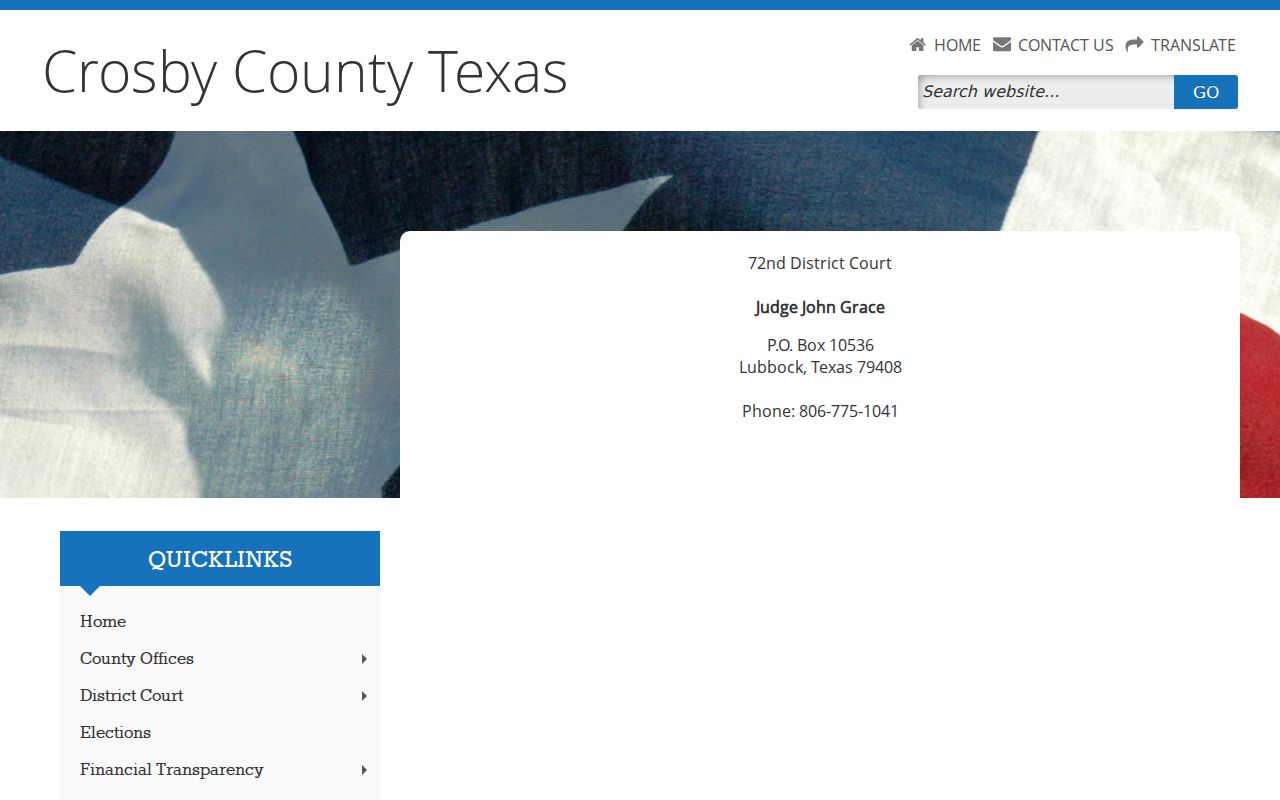
That court page helps identify the tribunal, while the District Clerk remains the custodian for the actual felony docket and filed documents.
Route Crosby County Case Records
Charge level controls where Crosby County case records are kept. The listed punishment class on a booking entry is only a starting clue. Prosecutors can amend, enhance, reduce, or reject a charge, so ask the clerk to confirm the final filed level and cause number.
| Court or custodian | Criminal record slice | Verified contact |
|---|---|---|
| 72nd District Court / District Clerk | Felonies and related district filings | 201 W Aspen, Suite 207; 806-675-2071 |
| Crosby County Court / County Clerk | Class A and Class B misdemeanors | 201 W Aspen, Suite 102; 806-675-2334 |
| Crosbyton Municipal Court | City ordinance and fine-only state cases | 221 W Main; 806-675-2301 |
| Crosby County Justice Court | Fine-only matters and magistration | Courthouse routing: 806-675-0208 |
| Seventh Court of Appeals | Appeals from county and district courts | Official appellate court site |
The two main clerks work in the same courthouse, but their indexes are separate. Call before travel because public-counter hours, device rules, and current copy fees are not posted.
How to Search Case Records
No local online case search has been published for Crosby County criminal matters. Begin with the alleged charge level and event location, then contact the office most likely to hold the file. A narrow request saves the clerk from searching several years of similarly named parties.
- Decide whether the matter is a felony, Class A or B misdemeanor, or fine-only city or justice case.
- Give the correct clerk the full name, an approximate filing year, and the cause number if known.
- Ask for the docket sheet plus the exact charging instrument, orders, judgment, or sentence needed.
- Ask about inspection, electronic or mailed copies, current charges, and certification before ordering.
- Request a certified disposition when correcting or completing a Texas DPS criminal-history entry.
The District Clerk's official contact page supplies the verified felony-record channel.
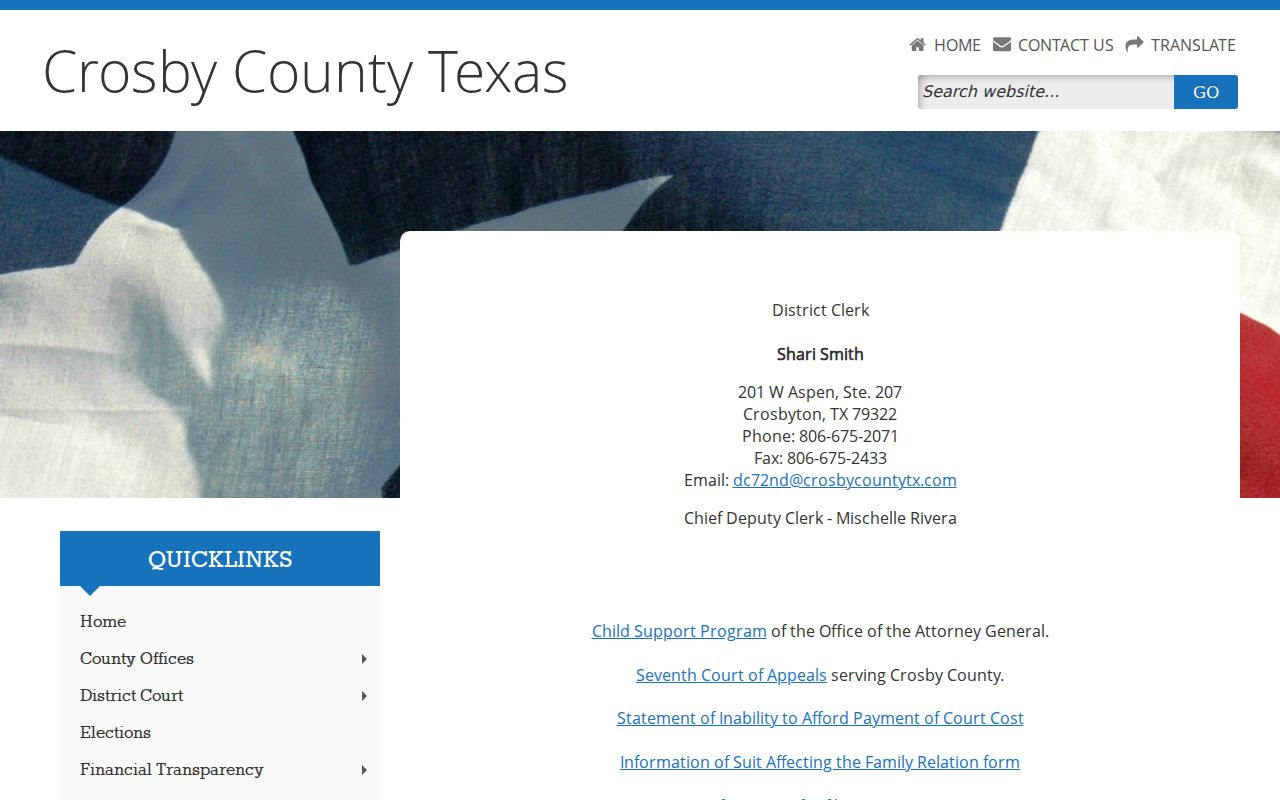
Use that office for a 72nd District Court cause, including a certified felony disposition or a district expunction filing.
Crosby County Misdemeanor Case Gap
The Texas Office of Court Administration clerk directory verifies that the Crosby County Clerk accepts County Court criminal filings and uses KiCorp as its case-management system. That fact does not create a public search portal. No county link exposes the KiCorp index, so an empty web search says nothing about whether a misdemeanor case exists. Call Suite 102 and request an index search, docket sheet, charging instrument, and disposition.
The official County Clerk page is the reliable starting point for those local misdemeanor files.
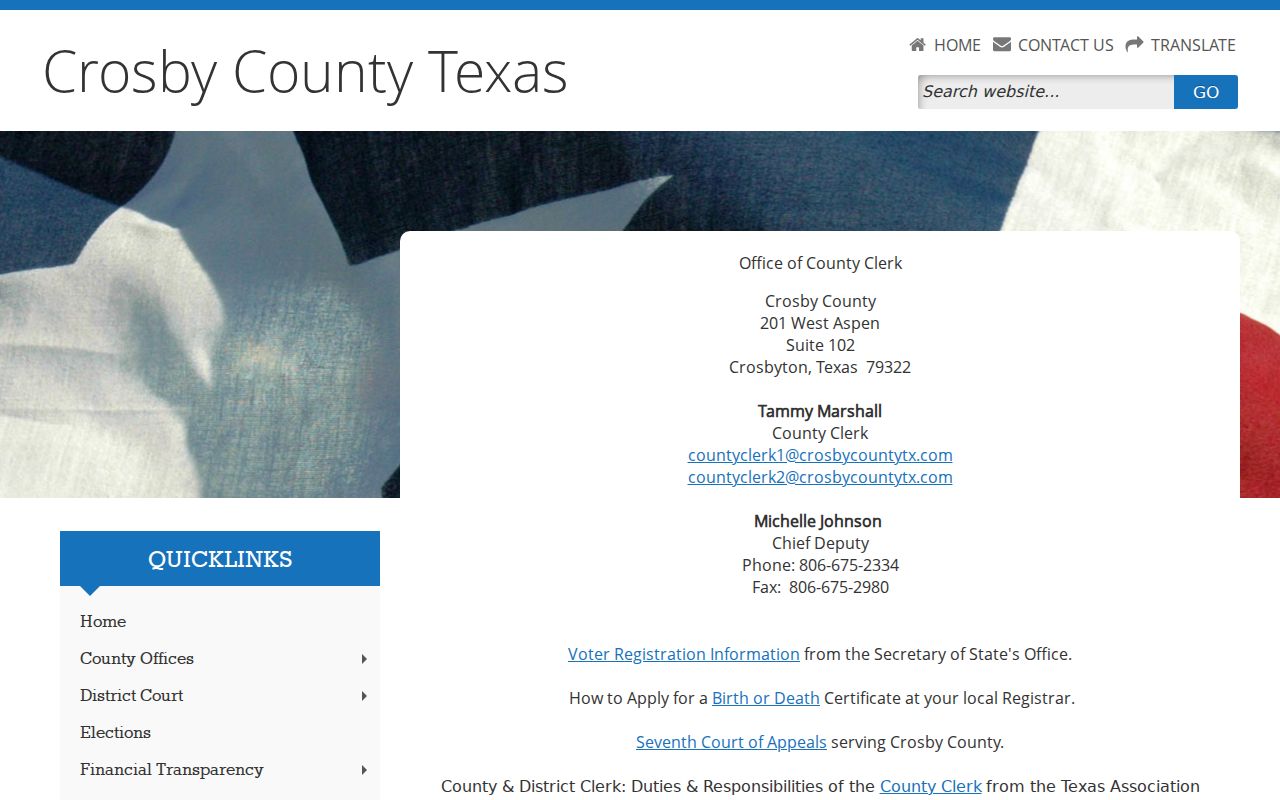
The page confirms the keeper and contact details, while a direct request reveals whether the clerk can inspect, copy, email, or certify the needed record.
Note: KiCorp is the clerk's internal case-management system, not a verified public Crosby County criminal case search.
What the Case File Shows
A Crosby County criminal case file is organized around one cause rather than a person's whole history. Read the header first, then follow the event register in date order. A filed count may differ from the booking allegation. The judgment and certified disposition are better sources for the final outcome than a search-result label.
| Cause header | Cause number, court, case type, filing date, and current status. |
|---|---|
| Parties | The State, defendant display name, and attorneys entered in the case. |
| Charges | Filed description, statute and class when coded, subject to later amendment. |
| Event register | Filings, arraignment, motions, hearings, plea, judgment, sentence, capias, and closure events. |
| Documents | Public complaints, informations, indictments, orders, judgments, and other available filings. |
| Financials | Costs, fines, and restitution when maintained and available for public inspection. |
| Redactions | Protected identifiers and victim, minor, sealed, or sensitive information removed from public copies. |
A docket is a chronological index, not always the complete file. Ask for the document itself when the wording of an order, plea, or judgment matters.
Crosby Criminal Cases and re:SearchTX
re:SearchTX supports registered searches for cases, filings, text, and hearings. Its controls can narrow results by county, court, case, or party. Yet the Texas Judicial Branch court-record FAQ warns that there is no one complete statewide trial-court criminal search, and the Office of Court Administration reported that the system's large document corpus excluded criminal case records. Crosby County users should treat it as a possible lead, never as the final index.
| Search control | Useful entry | Crosby County limit |
|---|---|---|
| County | Crosby | Does not ensure local criminal coverage |
| Court | Known trial court | Choose the clerk by charge level first |
| Case | Exact cause number | Best only when already known |
| Party | Full legal name | Name matches do not prove identity |
| Filings or hearings | Keywords and date filters | Missing criminal data can make results incomplete |
For the statewide conviction layer, the Texas DPS CCH instructions explain the public name search.
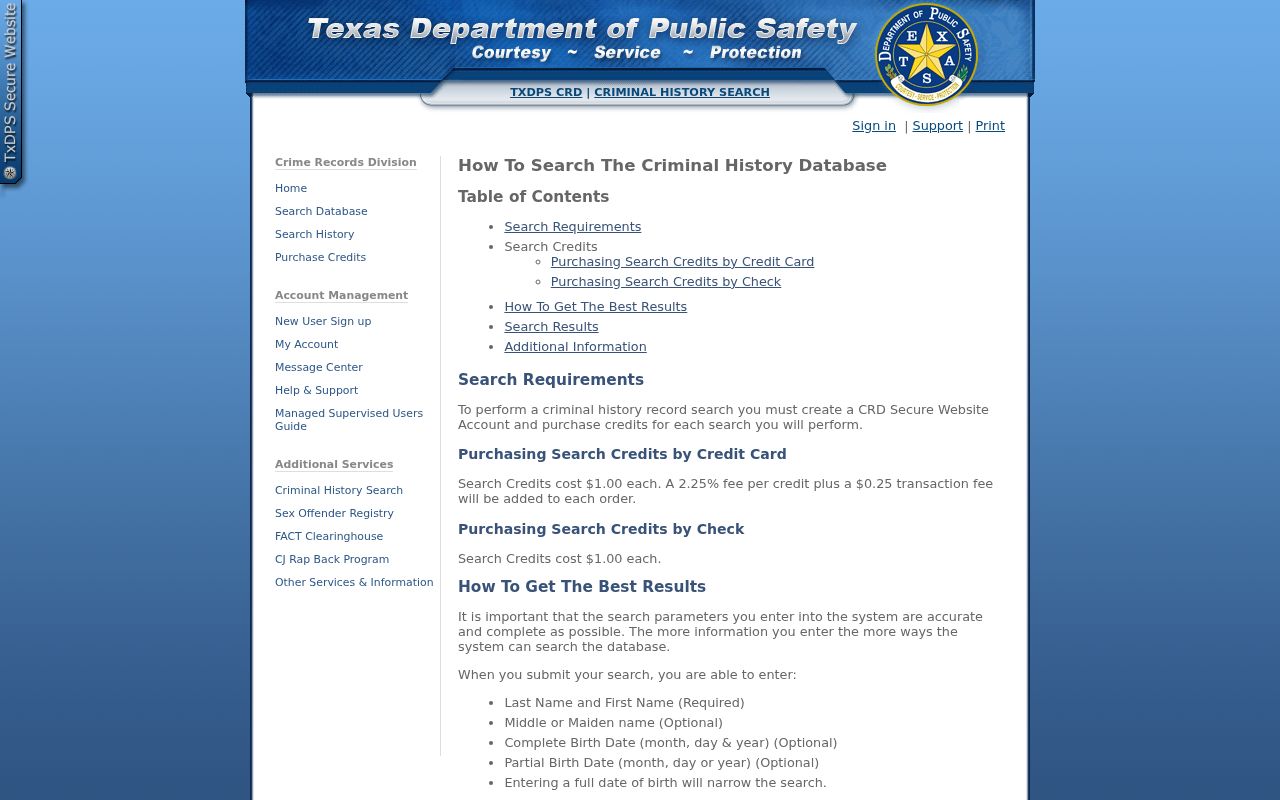
DPS aggregates reported public convictions and deferred adjudications, but a certified Crosby County judgment still comes from the court clerk.
Stages of a Criminal Case
A Crosby County case moves through distinct records and offices. The arresting agency first documents the event. A magistrate gives required warnings and addresses bond, generally promptly after arrest. The prosecutor then chooses whether and how to file. Felony accusations may proceed by indictment; misdemeanors commonly proceed by information.
Charges Filed → Arraignment → Pretrial → Plea or Trial → Disposition → Sentencing
Arraignment addresses the charge and plea. Pretrial entries can include discovery, motions, settings, and continuances. A plea or trial leads to disposition, meaning the formal case outcome. If guilt is entered, the judgment records the sentence. An appeal from a Crosby district or county court goes to the Seventh Court of Appeals. Each stage may add a docket event before the underlying document becomes available.
Read Crosby Criminal Case Events
Short docket labels can hide major differences. Read each event with the filed instrument and final order, especially when an early charge description conflicts with the judgment.
- Arraignment
- The proceeding at which the charge and plea are addressed.
- Indictment
- A felony accusation returned by a grand jury.
- Information
- A prosecutor-filed charging instrument commonly used for misdemeanors.
- Nolle prosequi
- The prosecutor's formal choice not to continue a charge.
- Disposition
- The outcome, such as conviction, dismissal, or acquittal.
- Capias
- A court command directing the arrest of a named person.
When the docket alone is unclear, ask the Crosby County clerk for the charging instrument, signed order, judgment, and certified disposition. Those documents show what was alleged and what the court ultimately did.
Federal Cases Beyond Crosby County
Crosby County lies in the Northern District of Texas, but federal prosecutions are not stored in the local district or county clerk indexes. PACER is the official federal case system. It requires an account and generally charges ten cents per page, with a three-dollar document cap and a quarterly waiver when total fees are under thirty dollars. Sealed matters do not appear for public access.
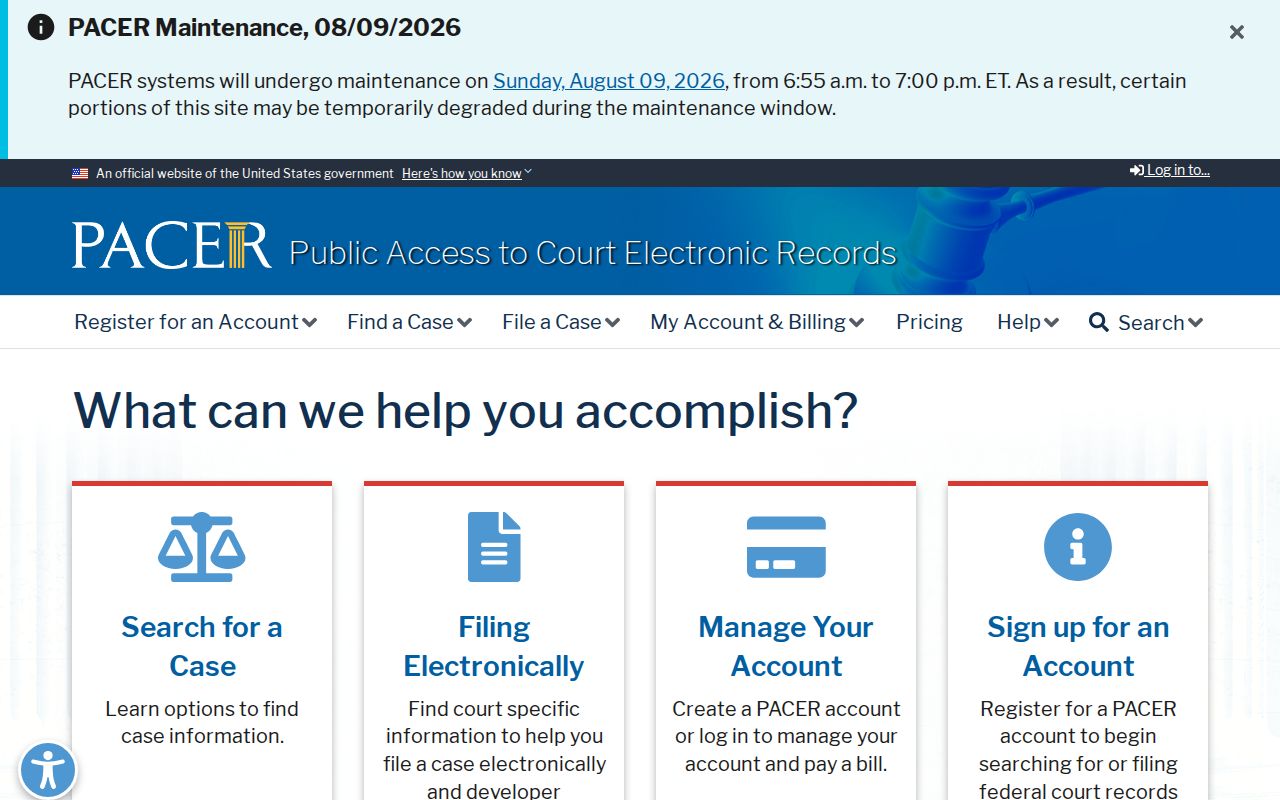
The PACER interface separates federal filings from Crosby County criminal case records and lets a user search the correct federal court by party or case number. A personal national history is a different product. The FBI electronic Identity History Summary is subject-only, costs eighteen dollars before any channeler fee, and requires fingerprints.
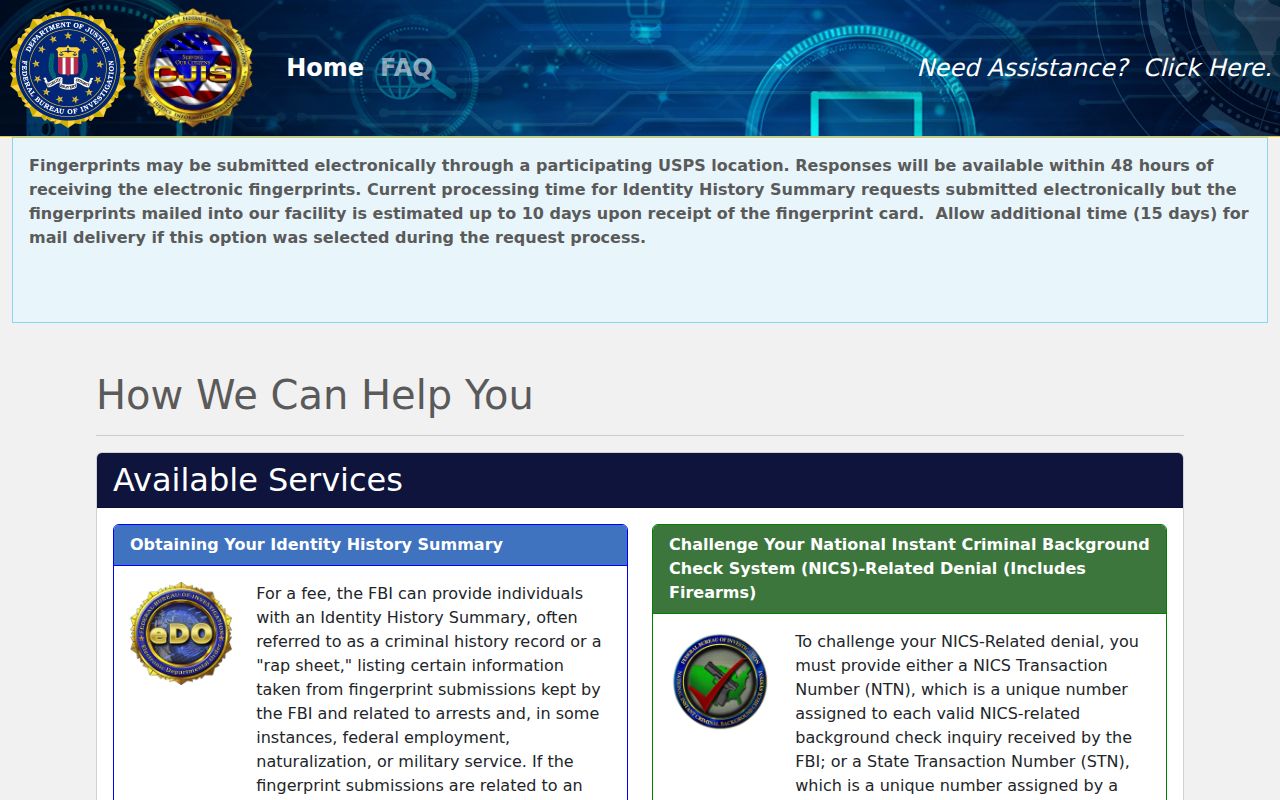
The FBI Identity History Summary instructions explain that fingerprint review. It does not replace a Crosby clerk search, but it can reveal fingerprint submissions reported to the FBI nationwide.
Access & Restrictions
Public Crosby County court files are requested from the clerk under court-access law, not through the ordinary agency-request path of the Texas Public Information Act. Texas judicial open-records guidance distinguishes administrative judicial records from adjudicative case files. The clerk can explain inspection and copy options, but staff cannot provide legal advice or reconstruct a broad history from vague questions.
Sealed cases, expunction orders, juvenile matters, grand-jury deliberations, protected victim or minor information, Social Security numbers, financial accounts, and other sensitive identifiers may be unavailable or redacted. A missing online result may also reflect archive format, spelling, delayed entry, or the absence of criminal content from re:SearchTX. Contact the proper clerk and ask for a manual index or archive search when the case is old.
If a DPS history lacks the outcome, obtain a certified Crosby County disposition and send it through the DPS Crime Records Service error-resolution process. A name match alone cannot prove identity; fingerprints are the reliable match method.